

Intercom built the modern in-app Messenger, but its bill now has four moving parts. Teams pay for seats, $0.99 for every answer Fin resolves, Copilot per agent and usage fees for WhatsApp or SMS.
The company also renamed itself Fin in May 2026, and Salesforce completed its takeover in September. Many support leads are now pricing Intercom alternatives before their next renewal.
Why teams look for Intercom alternatives
Most switches to Intercom competitors start with a renewal quote. These are the reasons teams compare Intercom alternatives, with the numbers behind them.
- Stacked costs. Seats, Fin outcomes, Copilot at $29 per agent and per-message WhatsApp or SMS fees all bill separately.
- Unpredictable AI spend. Intercom Fin bills $0.99 per resolved conversation, so a busy month can double the AI line without warning.
- Core features sit on Advanced. Workflows, multiple team inboxes and round-robin assignment need the $85 per seat plan.
- No free plan. Intercom offers a 14-day trial, while 8 of these 12 Intercom alternatives have a free tier.
- Ownership change. Salesforce bought Fin, formerly Intercom, for about $3.6 billion. Its completion notice did not say what happens to the Intercom helpdesk.
Intercom pricing in 2026
Seat prices look moderate until AI and add-ons join the invoice. All Intercom pricing figures are per seat a month, read on the official pricing page in November 2026.
- Essential. $29 billed yearly or $39 monthly, with a new-customer price of $19 yearly.
- Advanced. $85 billed yearly or $99 monthly, with 20 free Lite seats.
- Expert. $132 billed yearly or $139 monthly, sold through sales, with 50 Lite seats.
- Fin AI Agent. $0.99 per outcome on every plan, and $1.99 per voice outcome.
- Copilot. $29 per agent a month yearly, or $35 monthly, after 10 free conversations.
Five agents on Essential with 1,000 Fin answers come to about $1,135 a month. On Advanced, the same team pays about $1,415, which is why cheaper Intercom alternatives get a serious look.
Best Intercom alternatives in 2026
Every price for these Intercom alternatives is in US dollars and comes from the vendor’s own pricing page, checked in November 2026. Yearly prices are the monthly cost on annual billing.
Chatgram: best for AI support with no per-answer fees
Free planYes, 20 chats/moStarts at$9/mo flatAIIncluded in plan
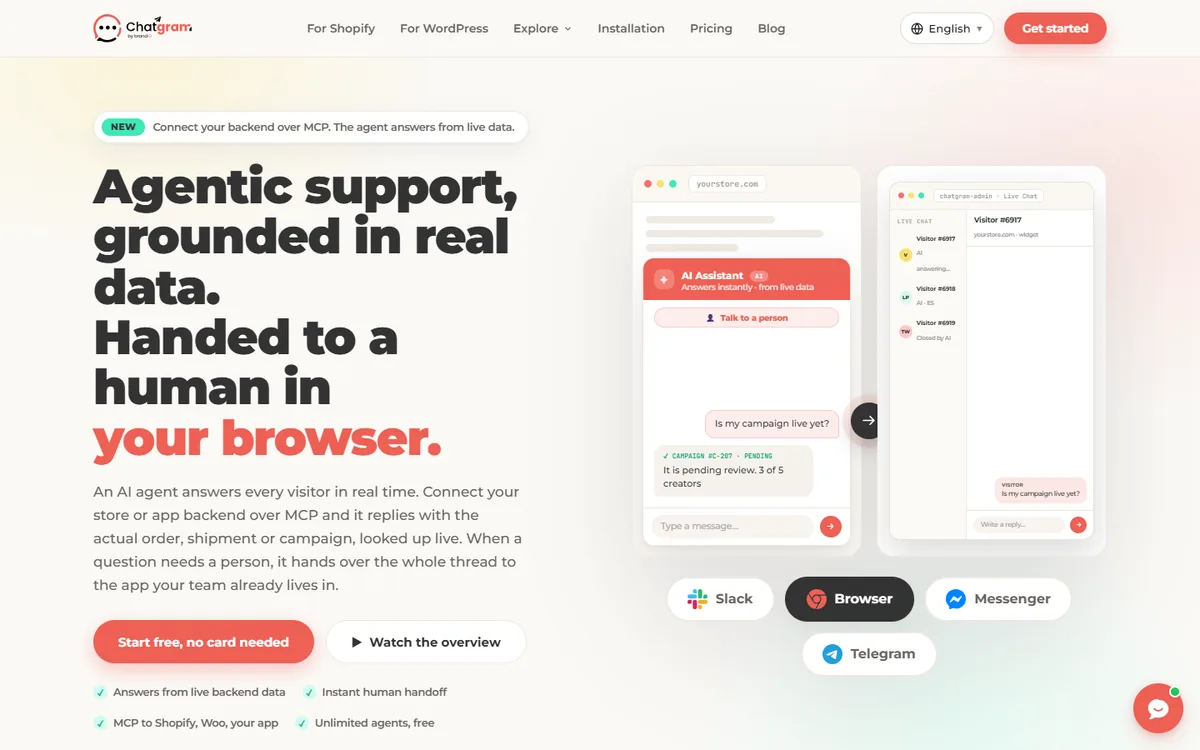
Chatgram is an AI-first helpdesk from brandID that answers website visitors in real time and passes hard questions to a person. Agents reply from Telegram, Slack or a browser dashboard instead of another inbox.
Every paid plan includes unlimited agents, so a team of ten pays the same as a team of one. AI replies are part of the plan, and each extra million AI tokens adds $3 a month on yearly billing.
Each AI draft carries a confidence score and a source citation. Refunds, chargebacks and complaints skip the AI entirely and route to a human.
Versus IntercomFive agents with 1,000 AI answers pay about $24 a month on Studio, against about $1,135 on Intercom Essential with Fin.
Pricing
- Solo. Free forever, with 1 website, 1 agent, 20 conversations a month and 50K AI tokens.
- Studio. $9 a month billed yearly ($24 monthly), unlimited agents, 200K AI tokens, Slack, MCP and no branding.
- Extra AI on Studio. 5.2M tokens cost $24 a month yearly, and 20.2M tokens cost $69.
- Studio+. $139 a month billed yearly ($259 monthly), 15 websites, 10M AI tokens and white-label.
- Enterprise. Custom pricing with single sign-on (SSO), audit logs, a 99.9% uptime SLA and migration help.
Pros
- AI replies and translation in 180+ languages carry no per-resolution fee.
- Unlimited agents on every paid plan, with no per-seat charge.
- Switchers get credit for the unused part of an Intercom contract, plus three free months.
Cons
- The free plan stops at 20 conversations a month.
- An AI reply uses about 5,000 tokens, so base Studio covers roughly 40 replies before you add tokens.
- A newer product, with a smaller review base than the big helpdesks.
Zendesk: best for large support teams
Free planNoStarts at$55/agentAIUp to $2 per resolution
Among Intercom alternatives, Zendesk is the closest like-for-like swap, with tickets, messaging, voice and a help center in one workspace. Its marketplace lists more than 1,800 apps.
Full messaging and live chat start on Suite Team, while the cheaper Support Team plan is mostly email tickets. AI agents come with every Suite plan and reply in 80+ languages.
Versus IntercomZendesk matches Intercom on depth, but each extra AI answer costs more than Fin’s $0.99. Its own pricing pushes many teams to compare Zendesk alternatives too.
Pricing
- Support Team. $19 per agent a month billed yearly ($25 monthly), ticketing with a basic widget.
- Suite Team. $55 per agent billed yearly ($69 monthly), with full live chat and messaging.
- Suite Professional. $115 per agent billed yearly ($149 monthly), with skills-based routing.
- AI. 5 automated resolutions per agent a month on Team plans, then $1.50 each committed or $2 pay-as-you-go.
- Copilot. $50 per agent a month. Enterprise is quote only, and the trial lasts 14 days.
Pros
- Mature ticketing, service-level agreements and reporting for large teams.
- AI agents included with every Suite plan.
- A huge ecosystem of 1,800+ integrations.
Cons
- AI overage reaches $2 per resolution on pay-as-you-go.
- Copilot adds $50 per agent on top of the seat.
- Setup and admin take real time.
Help Scout: best for email-first SaaS teams
Free planYes, 5 usersStarts at$25/userAI$0.75 per resolution
Help Scout feels like a shared email inbox that customers never experience as a ticket queue. Its Beacon widget adds website and in-app chat on every paid plan.
Envoy, its AI agent, costs $0.75 per resolution, the lowest per-answer price among these tools. New accounts get 3 months of unlimited free resolutions, and a spending cap switches the agent off at your limit.
Versus IntercomHelp Scout keeps pay-per-answer AI but charges $0.24 less per resolution than Fin, with cheaper seats.
Pricing
- Free. Up to 5 users, 1 inbox and 10 help articles, with no AI and no live chat.
- Standard. $25 per user a month billed yearly ($30 monthly), up to 25 users, with chat, WhatsApp, Instagram and Messenger.
- Plus. $45 per user billed yearly ($54 monthly), up to 50 users, adding AI drafts and summaries.
- Pro. $75 per user billed yearly ($90 monthly), sold through sales with a 10-user minimum.
- Envoy AI agent. $0.75 per resolution. 15-day trial with no card.
Pros
- The lowest per-resolution AI price, with a hard spending cap.
- A genuine free plan for up to 5 users.
- Chat and social channels included from Standard.
Cons
- User caps of 25 on Standard and 50 on Plus.
- AI drafts and summaries need Plus.
- Phone and voice work only through integrations.
Freshdesk: best for classic ticketing on a budget
Free planNoStarts at$29/agent (Omni)AI$49 per 100 sessions
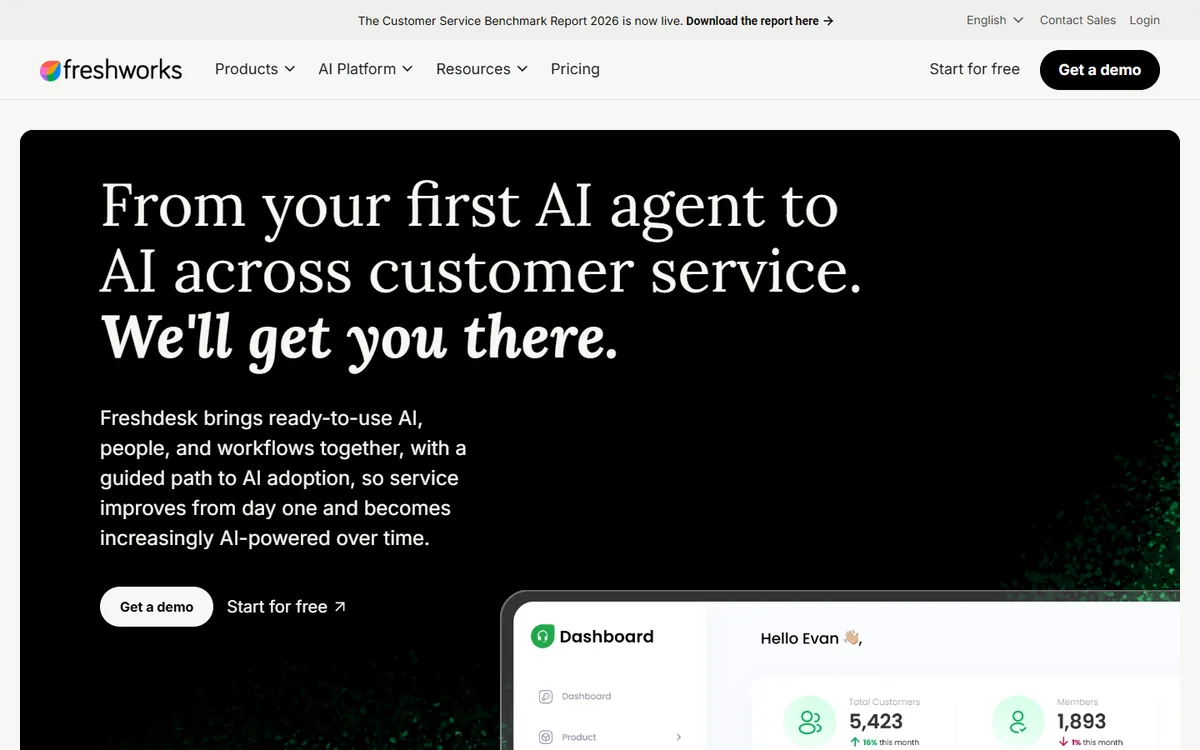
Freshdesk from Freshworks pairs mature ticketing, service-level agreements and a knowledge base with low seat prices. Website chat and chat AI agents need the Freshdesk Omni edition.
Freddy AI Agent sessions cost the same on every plan, at $49 per 100. The first 500 sessions are free once per account, not every month.
Versus IntercomFive Omni Growth agents with 1,000 AI sessions pay about $635 a month, roughly $500 less than Intercom.
Pricing
- Freshdesk Growth. $19 per agent a month billed yearly ($23 monthly), email-first with no chat widget.
- Omni Growth. $29 per agent billed yearly ($35 monthly), adding chat and messaging.
- Omni Pro. $79 per agent billed yearly ($95 monthly).
- Omni Enterprise. $119 per agent billed yearly ($143 monthly).
- AI. Freddy AI Agent $49 per 100 sessions, and Copilot $29 per agent yearly on Pro and above. 14-day trial.
Pros
- Full ticketing at a low seat price.
- One flat AI session price on every plan.
- The 14-day trial unlocks the top Enterprise tier.
Cons
- Live chat needs the pricier Omni edition.
- The 500 free AI sessions are one-time, not monthly.
- Copilot is missing on Growth, and skill-based routing is Enterprise only.
HubSpot: best for teams already on HubSpot CRM
Free planYes, 2 usersStarts at$7/seat (promo)AI$0.50 per resolution
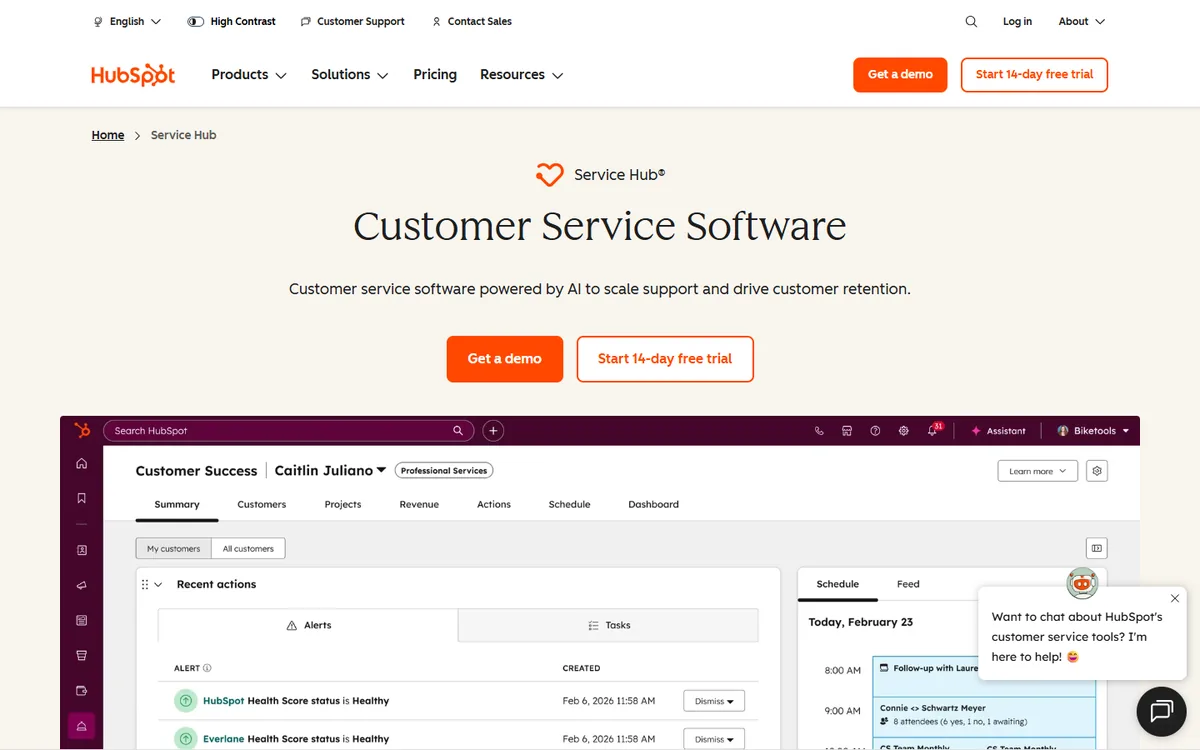
HubSpot’s Service Hub puts every chat on a contact record in its free customer relationship management (CRM) system. Agents see each customer’s emails, deals and past tickets beside the conversation.
Its Customer Agent answers on chat, WhatsApp, Messenger and email for $0.50 per resolved conversation. That is half of Fin’s price, but the agent only runs on Professional and Enterprise seats.
Versus IntercomFive Professional seats with 1,000 AI answers cost about $950 a month, plus $1,500 once for onboarding.
Pricing
- Free. Up to 2 users, with HubSpot branding on the chat.
- Starter. $7 per seat a month billed yearly for new customers ($20 list price).
- Professional. $90 per seat on an annual commitment, plus a $1,500 onboarding fee.
- Enterprise. From $150 per seat, plus a $3,500 onboarding fee.
- Customer Agent. 50 credits ($0.50) per resolved conversation, on Professional and Enterprise only.
Pros
- A free chat tool tied to a free CRM.
- AI costs $0.50 per resolution, with no AI seat fee.
- Marketing and sales history sits next to every ticket.
Cons
- Costs jump sharply after Starter, with onboarding fees on top.
- AI is locked to Professional and Enterprise.
- Ticket handling, such as merging, draws frequent complaints.
Front: best for shared email inboxes
Free planNoStarts at$25/seatAIFrom $0.39 per conversation
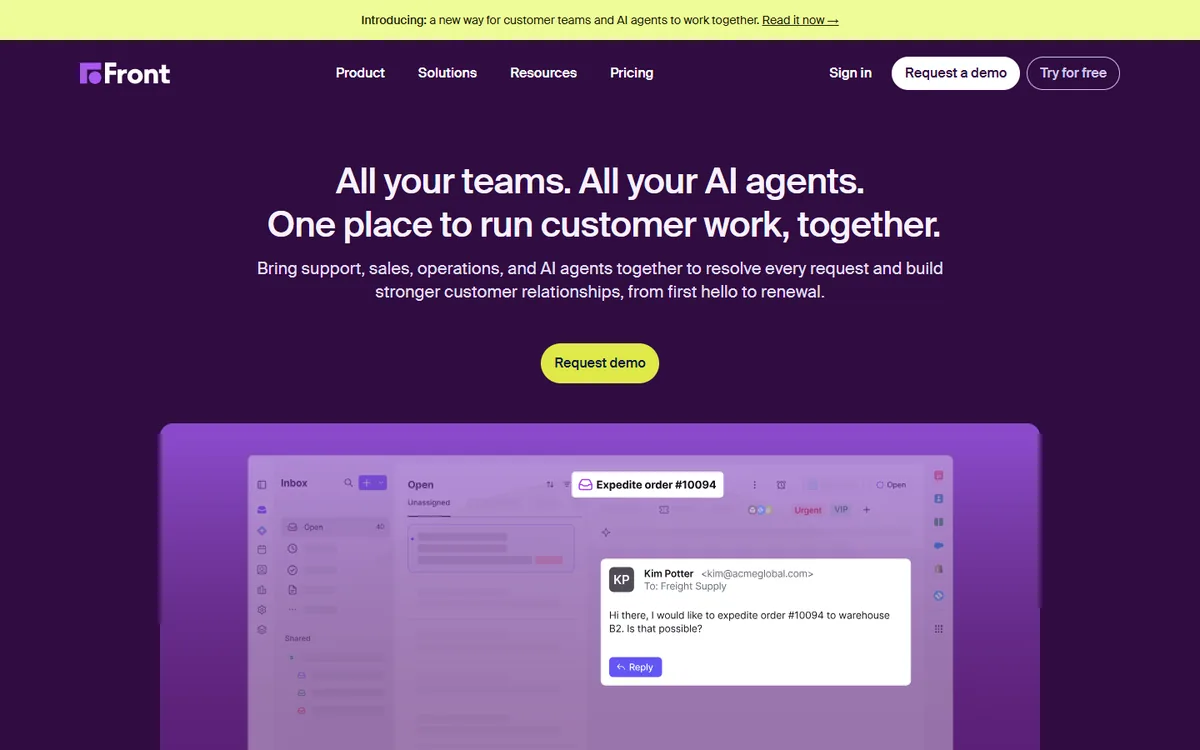
Front turns team email, chat and text messages (SMS) into shared inboxes with internal comments and shared drafts. Business-to-business (B2B) and operations teams pick it when most requests still arrive by email.
Autopilot, its AI agent, starts at $0.39 per conversation, under every other per-answer price these vendors publish. The full rate card comes through sales, so ask for it in writing.
Versus IntercomFront beats Intercom on shared email, while Intercom’s Messenger stays stronger for in-app chat.
Pricing
- Starter. $25 per seat a month billed yearly ($35 monthly), up to 10 seats and one channel type.
- Professional. $65 per seat billed yearly ($85 monthly), up to 50 seats with every channel.
- Enterprise. $105 per seat, annual billing only.
- Autopilot AI agent. From $0.39 per conversation, sold through sales.
- Copilot. $20 per seat on Starter and Professional, included in Enterprise. 14-day trial with no card.
Pros
- Collaboration tools built around shared email.
- The lowest AI agent entry price in this comparison.
- Copilot, quality checks and satisfaction scoring are bundled in Enterprise.
Cons
- Starter allows one channel type and 10 seats.
- Enterprise is annual only, and Professional caps at 50 seats.
- Autopilot pricing needs a sales call.
Gorgias: best for Shopify stores
Free planNoStarts at$10/mo (50 tickets)AI$0.90 per interaction
Unlike most Intercom alternatives, Gorgias prices by ticket volume instead of seats, and every plan from Basic up includes 500 user seats. Its AI agent can cancel orders, apply discounts and start returns.
Every plan bundles the helpdesk with AI Agent and supports Shopify and WooCommerce. Each AI interaction also counts as a ticket, so busy months draw on two allowances at once.
Versus IntercomGorgias suits online stores better than Intercom because its AI actions are built for Shopify from day one.
Pricing
- Starter. $10 a month for 50 tickets and 3 seats, or $40 with AI and 30 AI interactions.
- Basic. $50 a month billed yearly ($60 monthly) for 300 tickets, or $77 yearly with AI.
- Pro. $300 billed yearly ($360 monthly) for 2,000 tickets, or $471 yearly with AI and 190 AI interactions.
- Advanced. $750 billed yearly ($900 monthly) for 5,000 tickets, or $1,227 yearly with AI.
- AI. $0.90 per automated interaction on annual plans, $1 monthly and $1.50 above the allowance. 7-day trial.
Pros
- No per-seat pricing, with 500 seats from Basic.
- Order edits, discounts and returns handled inside the chat.
- Shopify, WooCommerce, BigCommerce and Magento support.
Cons
- Ticket caps with overage fees.
- AI interactions count against the ticket allowance too.
- Voice and SMS pricing is not published.
Tidio: best for small online stores
Free planYes, 50 chats/moStarts at$29/mo flatAILyro in chat tiers
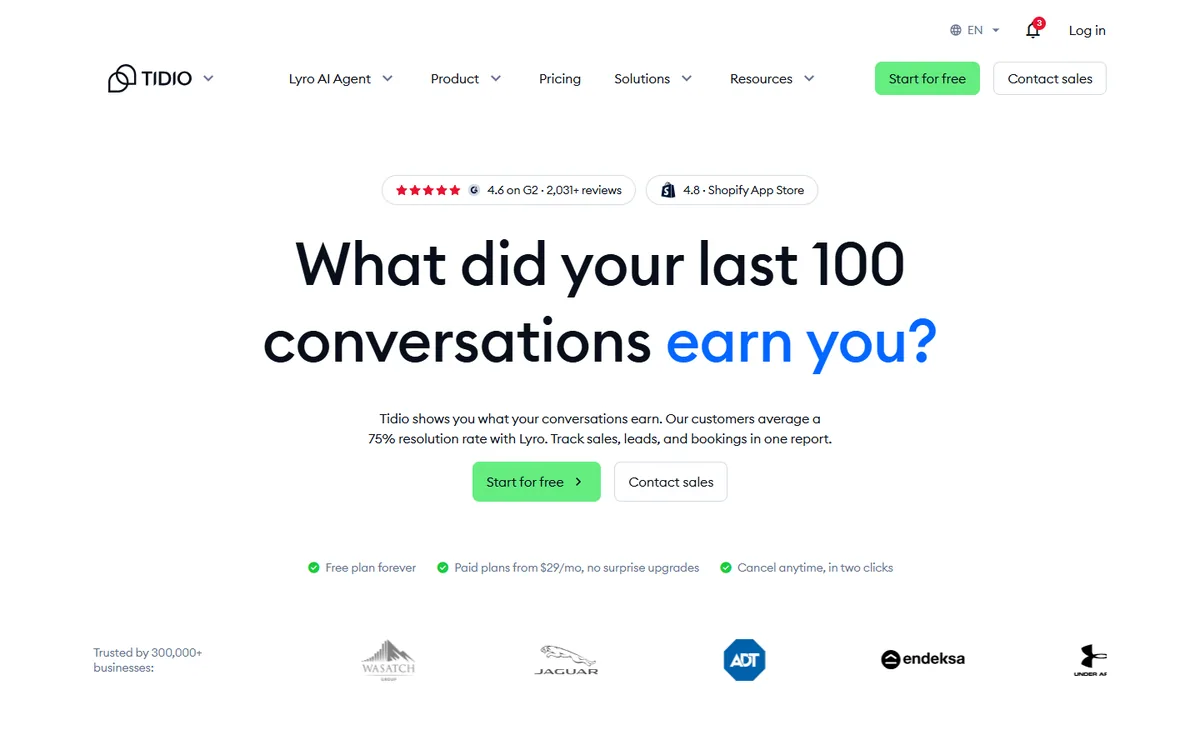
Tidio is built for Shopify and WooCommerce stores, and its WordPress plugin has more than 70,000 active installs. Chat, email, Messenger, Instagram and WhatsApp share one inbox.
Plans follow monthly conversation volume instead of seats, with up to 10 seats included. Lyro, its AI agent, draws on the same conversation quota as your human team.
Versus IntercomTidio costs a fraction of Intercom for a small store, but its flat plans stop at 10 seats.
Pricing
- Free. 50 human conversations a month, plus 50 one-time Lyro conversations.
- Starter. $29 a month human only (100 conversations), or $39 with Lyro (50 conversations).
- Growth. $49 a month human only at 200 conversations, or $75 with Lyro at 100 conversations.
- Plus. From $300 a month through sales, with custom seats and limits.
- Annual billing gives 2 months free, and branding removal is a $20 monthly add-on. 7-day trial with no card.
Pros
- A usable free plan and a trial with no card.
- One flat price covers up to 10 seats.
- Shopify order lookups on Growth.
Cons
- Growth with Lyro reaches $700 a month at 1,000 conversations.
- Self-serve plans stop at 10 seats.
- Add-ons stack up, including Flows, Voice and branding removal.
Crisp: best for flat pricing with unlimited chats
Free planYes, 2 seatsStarts at$45/mo flatAICredits in plan
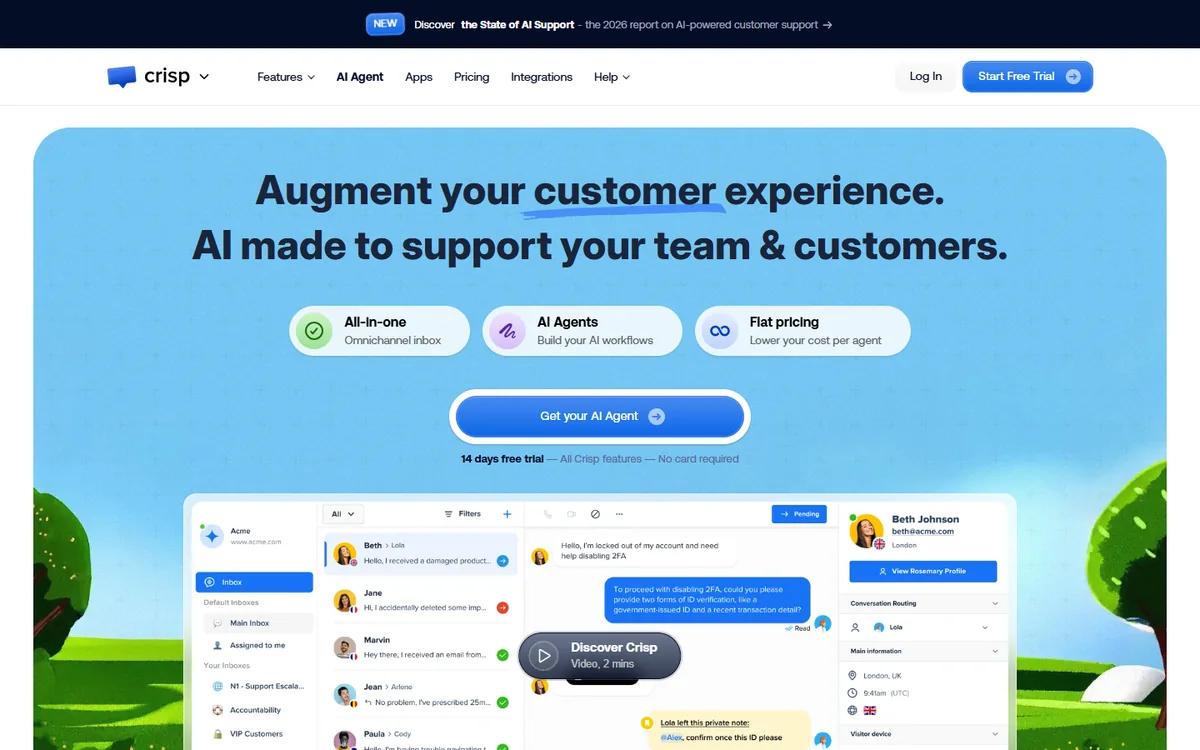
Crisp charges one flat price per workspace, and every plan includes unlimited conversations. The Essentials plan covers 10 seats for $95 a month.
Hugo, its AI agent, starts on the Mini plan, while higher plans add WhatsApp, Instagram, phone and co-browsing. Nonprofits and students get 50% off.
Versus IntercomTen agents on Crisp Essentials cost $95 a month, less than one Intercom Expert seat.
Pricing
- Free. 2 seats and 100 customer profiles, with no AI.
- Mini. $45 a month, 4 seats and about 90 AI conversations.
- Essentials. $95 a month, 10 seats and about 450 AI conversations.
- Plus. $295 a month, 20 seats (then $10 per extra agent) and white label.
- 14-day trial with every feature and no card.
Pros
- Flat pricing with unlimited conversations.
- WhatsApp, Telegram, Viber, SMS and phone channels.
- A permanent free plan that includes the mobile apps.
Cons
- A big price jump between Essentials and Plus.
- Hard seat caps of 4 on Mini and 10 on Essentials.
- Hugo stops once the monthly AI credits run out.
Zoho Desk: best for the cheapest seats
Free planYes, 3 usersStarts at$7/userAIIncluded, no per-answer fee
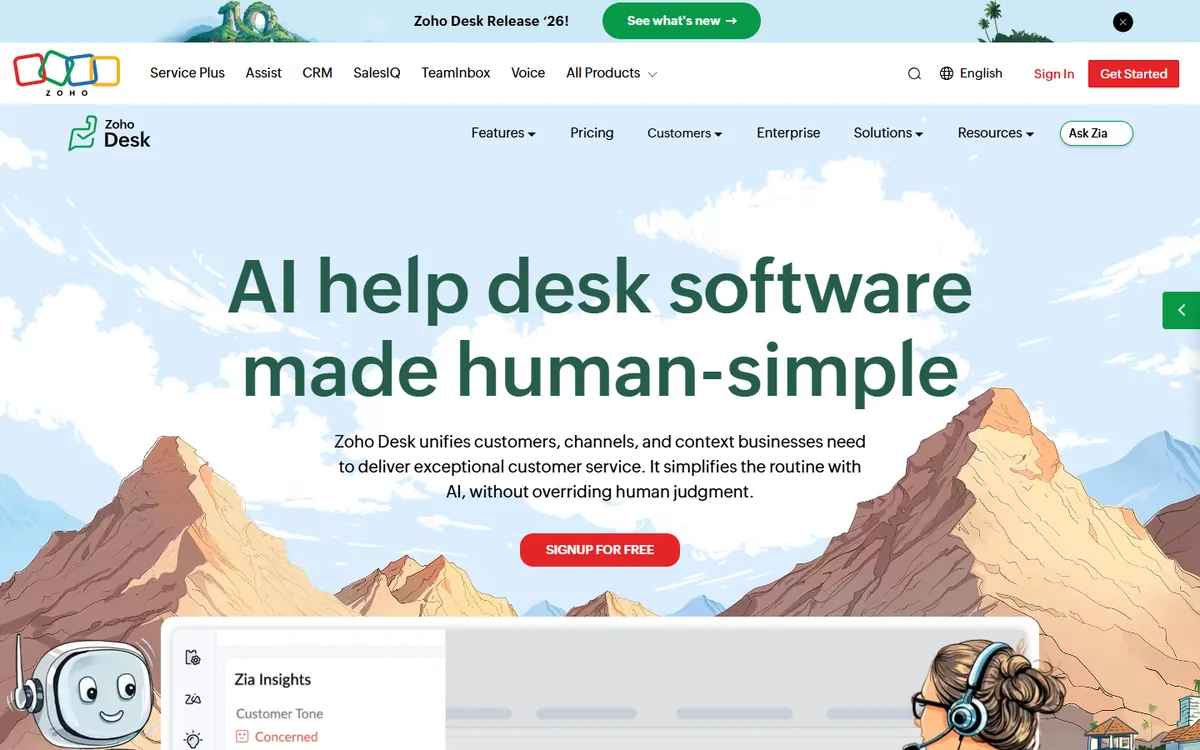
Zoho Desk has the lowest seat prices among these tools and charges no per-resolution AI fees. Its Zia assistant handles sentiment, tagging and answer suggestions on Standard and above.
Live chat is the catch. The Standard widget only serves logged-in customers, so chat for any website visitor needs Enterprise at $40 per user.
Versus IntercomFive Enterprise seats cost $200 a month with AI included, about a sixth of Intercom with 1,000 Fin answers.
Pricing
- Free. 3 users with limited features and no live chat.
- Express. $7 per user a month billed yearly ($9 monthly), 5 users, AI with your own OpenAI or DeepSeek key.
- Standard. $14 per user billed yearly ($20 monthly), AI agents with up to 30M free Zoho AI tokens a month.
- Professional. $23 per user billed yearly ($35 monthly), with telephony and native generative AI.
- Enterprise. $40 per user billed yearly ($50 monthly), with live chat for every visitor. 15-day trial with no card.
Pros
- The lowest seat prices in this comparison.
- AI included in the plan, with no per-resolution fee.
- Telephony and multi-department support from Professional.
Cons
- Chat for anonymous visitors needs Enterprise.
- Express caps at 5 users, with no knowledge base or chat.
- Audit logs and skill-based routing are Enterprise only.
Chatwoot: best open-source Intercom alternative
Free planYes, 2 agentsStarts at$19/agentAI$20 per 1,000 credits
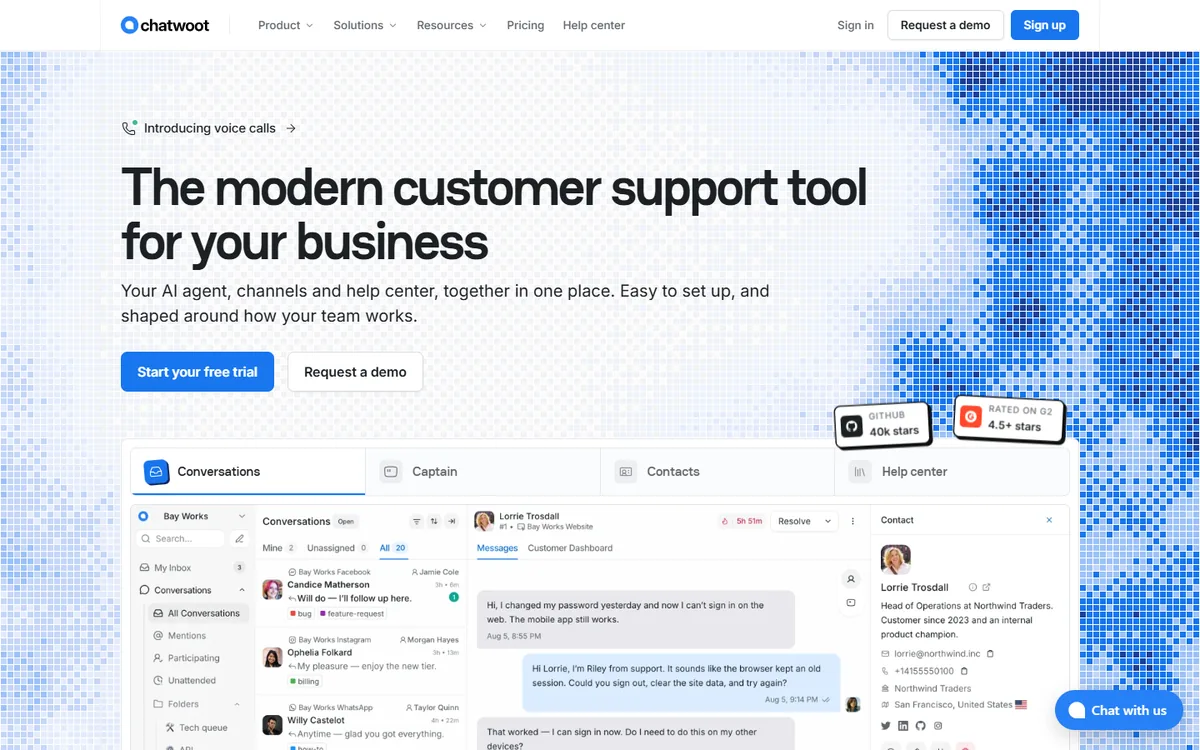
Chatwoot is an open-source inbox and chat widget that works much like Intercom’s Messenger. Teams can use the hosted cloud or run the free Community Edition on their own servers.
Captain, its AI agent, runs on credits included with paid cloud plans. Self-hosting keeps every conversation on your own infrastructure, which suits privacy-focused teams.
Versus IntercomChatwoot is the closest free match for Intercom’s Messenger, but you trade vendor support for hosting work.
Pricing
- Hacker. Free cloud plan for 2 agents, 500 conversations a month and 30-day history.
- Startups. $19 per agent a month with 300 AI credits.
- Business. $39 per agent with 500 AI credits, automation rules and teams.
- Enterprise. $99 per agent with 800 AI credits, SSO and audit logs.
- Self-hosted. Community Edition is free, and Premium at $19 per agent adds Captain AI. Extra credits cost $20 per 1,000.
Pros
- Open source, with a free self-hosted edition.
- A free cloud tier that includes live chat.
- Low paid entry with AI credits included.
Cons
- Automation rules and teams need Business.
- Self-hosting needs Linux, PostgreSQL, Redis and at least 4GB of RAM.
- Credit use per AI action is not published.
tawk.to: best free Intercom alternative
Free planYes, unlimitedStarts at$0 + add-onsAICredits, $30 per 1,000
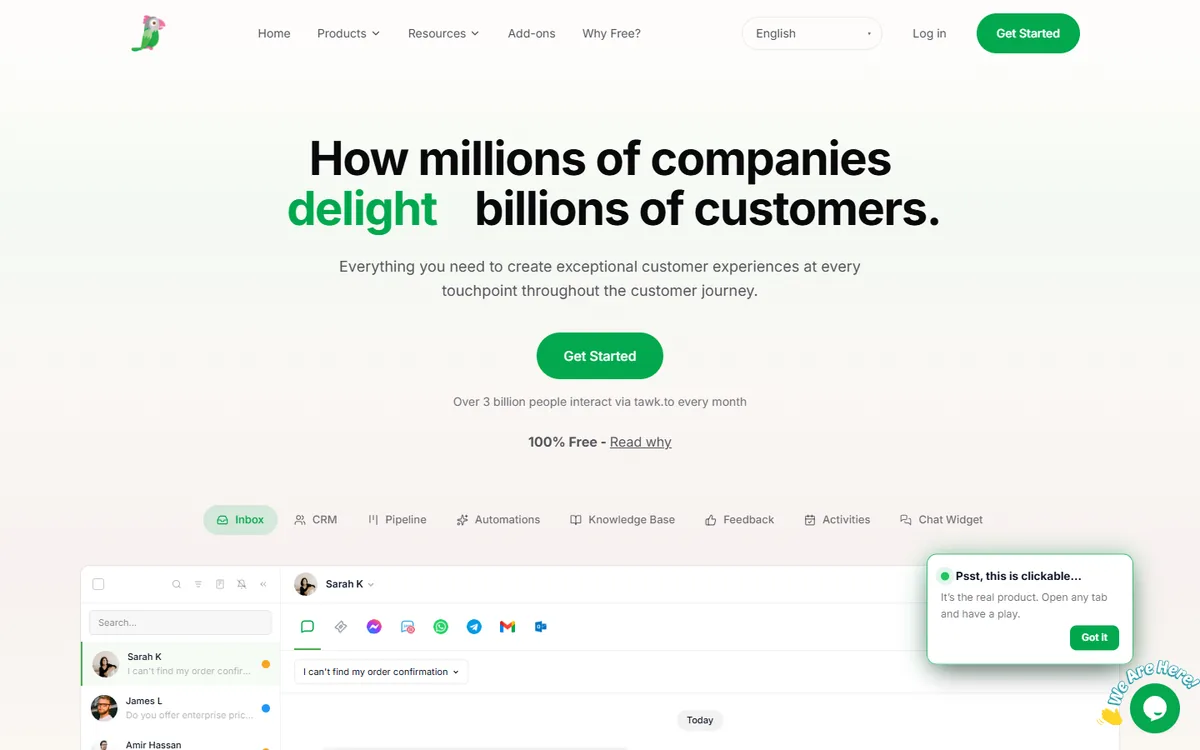
tawk.to gives away live chat, ticketing, a knowledge base and a simple customer database with no seat or chat limits. Its WordPress plugin alone has more than 100,000 active installs.
Revenue comes from add-ons billed per website instead of per agent. It can even rent you human chat agents for $1 an hour.
Versus Intercomtawk.to replaces Intercom’s chat for $0, though AI and branding removal cost extra.
Pricing
- Core product. Free forever, with unlimited agents and chats.
- Branding removal. $39 a month per website, or $348 a year.
- AI Assist. Free Hobby tier with 100 credits, Growth $29 a month (1,000 credits) and Business $99 a month (5,000 credits).
- Hired agents. $1 an hour for round-the-clock coverage.
- An AI reply uses about 3 credits, and top-ups cost $30 per 1,000 credits.
Pros
- Free, with no caps on agents or chats.
- Per-website add-ons suit large teams on one site.
- Native apps for iOS, Android, macOS and Windows.
Cons
- The tawk.to badge stays unless you pay $39 a month per site.
- AI credits drain fast at about 3 credits per reply.
- Reporting and widget customization are limited.
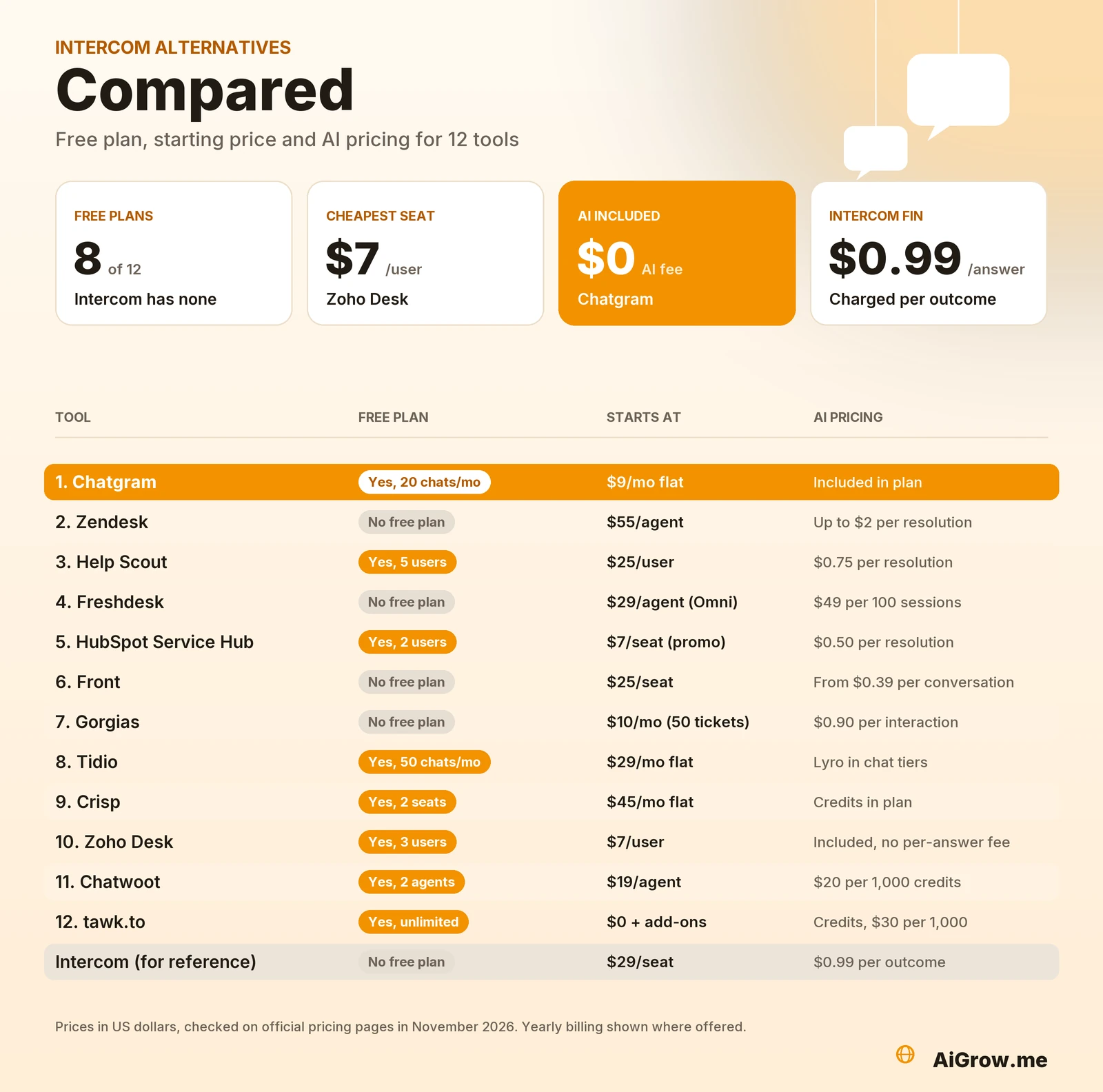
Intercom alternatives compared
What 1,000 AI answers a month cost
AI pricing now decides most bills. The figures assume 5 agents, yearly billing, website chat and 1,000 AI-resolved conversations a month, on each tool’s cheapest plan that offers both.
- Chatgram Studio. About $24 a month, with 5.2M AI tokens and unlimited agents.
- Zoho Desk Enterprise. About $200 a month, since AI carries no per-answer fee.
- Chatwoot Business. About $205 a month, assuming one AI credit per answer.
- Front Starter. From about $515 a month, with Autopilot at its $0.39 starting rate.
- Freshdesk Omni Growth. About $635 a month, with Freddy sessions at $49 per 100.
- Tidio Growth with Lyro. About $700 a month at 1,000 conversations.
- Help Scout Standard. About $875 a month, with Envoy at $0.75 per resolution.
- HubSpot Professional. About $950 a month, plus a $1,500 onboarding fee.
- Intercom Essential. About $1,135 a month, with Fin at $0.99 per outcome.
- Gorgias Pro. About $1,686 a month if the 810 AI interactions above the allowance bill at $1.50.
- Zendesk Suite Team. About $1,738 a month at the $1.50 committed rate, or $2,225 pay-as-you-go.
Crisp and tawk.to are left out because their AI allowances do not stretch to 1,000 answers on a comparable plan. Before signing with any of these Intercom alternatives, ask for a written quote at your own volume.
Free and open-source Intercom alternatives
A free plan is the cheapest way to test a replacement on real traffic. The limits decide how far each one goes.
- tawk.to. Unlimited agents and chats, with branding unless you pay $39 a month.
- Chatwoot. Free self-hosted Community Edition, or a free cloud plan for 2 agents and 500 conversations.
- Chatgram. 1 agent and 20 conversations a month, with AI and translation included.
- Tidio. 50 human conversations a month.
- Crisp. 2 seats with unlimited chats but no AI.
- HubSpot. 2 users, with HubSpot branding on the chat.
- Help Scout. 5 users on email only, with no live chat.
- Zoho Desk. 3 users on tickets only, with no live chat.
How to switch from Intercom
A clean move takes about two weeks for a small team. These steps keep conversations, articles and reporting intact, whichever tool you pick.
- Export before you cancel. Pull contacts, conversations and tags through Intercom’s data export or REST API while the account is active.
- Move the help center. Export articles and recreate the category structure, so search traffic to old article URLs can redirect.
- Rebuild saved replies and routing. List every macro, tag and assignment rule first, because most tools import tickets but not workflows.
- Run both widgets in parallel. Keep Intercom live on logged-in pages for a week while the new widget covers the public site.
- Swap the Messenger snippet. Replace Intercom’s script tag with the new widget in your site template or tag manager.
- Ask for contract credit. Chatgram credits the unused value of an Intercom contract and adds three free months.
How to choose an Intercom alternative
Feature grids look alike, so price your own volume and check a few specifics instead.
- Count AI answers, not seats. At 1,000 AI answers a month, per-answer fees outweigh seat prices on most plans.
- Check where chat starts. Freshdesk needs Omni and Zoho Desk needs Enterprise before anonymous visitors can chat.
- Read the seat caps. Tidio stops at 10 seats, Front Starter at 10 and Help Scout Standard at 25.
- Match the platform. Shopify stores get more from Gorgias, Tidio or Chatgram, while CRM-led teams fit HubSpot.
- Consider chat-only tools. If you only need a website widget, the best live chat software costs far less than a full helpdesk.
Conclusion
For most teams, Chatgram is the strongest Intercom alternative in 2026. AI replies, translation and unlimited agents come in one flat price, so the bill stays steady as volume grows.
Large support operations that need deep ticketing will feel at home on Zendesk or Freshdesk. Email-first teams should test Help Scout, and Shopify brands should look at Gorgias.
Budget teams can start on tawk.to or self-hosted Chatwoot for nothing. Both are free Intercom alternatives that grow into paid AI when the volume justifies it.
FAQs
What is the best Intercom alternative in 2026?
Most teams get the best value from Chatgram, because its $9 Studio plan includes AI replies and unlimited agents with no per-answer fee. Zendesk suits large ticket-heavy teams, and Help Scout suits email-first SaaS companies.
What is the cheapest alternative to Intercom?
tawk.to and self-hosted Chatwoot cost nothing for live chat. Among paid Intercom alternatives with AI, Chatgram Studio starts at $9 a month for unlimited agents. Zoho Desk seats start at $7 per user.
Is there a free Intercom alternative with live chat?
tawk.to offers unlimited free agents and chats, and Chatwoot is free to self-host on your own server. Chatgram, Tidio, Crisp and HubSpot also run limited free plans with a chat widget.
Is Intercom now called Fin?
In May 2026 the company renamed itself Fin, while Intercom remains the name of its helpdesk product. Salesforce completed its acquisition of Fin in September 2026, at a price of about $3.6 billion.
How much does Intercom cost per month?
Seats cost $29, $85 or $132 per month on yearly billing, depending on the plan. Fin adds $0.99 per resolved conversation, so five Essential agents with 1,000 AI answers pay about $1,135. Copilot costs another $29 per agent.
Which Intercom alternative is best for ecommerce?
Gorgias leads for Shopify brands that need order edits and returns inside the chat. Smaller stores often choose Tidio or Chatgram, which both connect to Shopify and WooCommerce at a lower monthly price.